Attorney
Legal Law1. What Does an Attorney Actually Do? 🤔
The Short Answer
An attorney is the person you call when life turns into a complicated rulebook—and you need someone who can read it fast, explain it clearly, and fight smart. Think: part strategist, part writer, part negotiator, part “calm voice” when everything is on fire. 🔥
Day-to-day, attorneys:
- Research laws (aka: “What do the rules actually say?”)
- Explain options to clients in plain English (no legal mumbo-jumbo)
- Write and review documents like contracts, wills, and agreements
- Negotiate deals and settlements (often to avoid court)
- Argue in court when negotiation fails—presenting your side to a judge or jury
And yes, attorneys specialize. One might defend someone accused of a crime, another might handle divorces and custody, and another might live in the world of business deals and contracts.
A “day in the life” example (one realistic version):
- 9:00 AM: Coffee + inbox triage. A client is panicking about a contract dispute.
- 10:30 AM: Deep reading session. You review documents like your grade depends on it (because someone’s life or money might).
- 1:00 PM: Call with opposing counsel. You negotiate terms like it’s a chess match.
- 3:00 PM: Draft a legal document (precision writing, not vibes).
- 6:30 PM: Prep for a deposition or hearing tomorrow.
- 9:00 PM: Still working if you’re in a high-pressure environment (more on that soon).
Why This Career is Awesome ✨
You know that feeling when you help a friend win an argument because you brought receipts? Now imagine doing that… professionally… with real consequences.
This career can feel meaningful because you might:
- Help someone get fair compensation after an accident
- Protect someone’s freedom in criminal defense
- Help a family keep their home
- Stop harm to communities (like environmental lawyers pushing back on pollution)
There’s also a real “intellectual challenge” factor. If you like puzzles, debate, and strategy—law can feel like a never-ending boss battle where the rules change and you still have to win.
And the “flex” moments? They’re real:
- You argue a case in court.
- You negotiate a deal that saves a business.
- You write an agreement that prevents a future disaster. That’s not movie magic—that’s the job.
The Hard Truths (Reality Check) ⚠️
Law is not just dramatic courtroom speeches and mic drops. A lot of it is reading dense text, writing carefully, and handling pressure when the stakes are high.
In many places (especially Big Law), the grind is real:
- 50–70+ hour weeks are common early on
- Overtime, weekend work, and travel for trials/depositions can happen
- Stress can be intense because you’re dealing with conflict for a living
And here’s the twist: the work can be emotionally heavy. Clients may be scared, angry, or desperate. Opposing sides aren’t always polite. Deadlines don’t care about your sleep schedule.
What Nobody Tells You:
- Stress & mental health: Relentless deadlines + high-stakes losses can hit hard.
- Work-life balance: Early career can be brutal—60–100 hours/week is common in Big Law.
- Physical health: Sedentary desk work + long hours can lead to burnout and anxiety.
Common Regrets from People Who Left:
- “I wish I knew the grind before debt.”
- Some associates quit after 3 years because 80-hour weeks don’t play nice with being a human.
The Financial Reality:
- Education is long: 4-year bachelor’s + 3-year JD + bar exam
- Bar exam pass rate is about 70% (retakes are common)
- Student debt can be $150K+ (and sometimes $200K+)
- Hidden costs add up: bar prep ~$5K, suits, and bar dues ~$1K/year
Career Risks:
- Routine tasks (basic research, document review, standard drafting) are increasingly automated by AI tools.
- Competition is intense—especially for top firms, where “Top 14 law schools dominate Big Law” and networks can matter a lot.
Myth-busting time: it’s not always glamorous. Sometimes it’s you, a stack of documents, and a deadline that feels like a villain. But if you’re prepared, it can still be an amazing path.
2. Is This Career Future-Proof? 📈
Job Market Reality Check
The outlook is stable with about 8% growth and moderate demand. Over the next 5–10 years, demand should stay steady—especially for attorneys with specialized skills.
Job security tends to be:
- High for experienced specialists
- More competitive for generalists
Also interesting: recessions can shift the type of work. Corporate work may slow down, but litigation can increase.
Will AI Replace This Job?
AI is absolutely changing legal work—but it’s not “game over.” It’s more like: the easy parts get automated, and the human parts become more valuable.
AI will increasingly handle:
- Routine document review
- Basic legal research
- Some standard drafting and paralegal-style tasks
Humans stay essential for:
- High-level strategy and judgment in complex cases
- Negotiation (reading the room is not just data)
- Client advocacy and ethics
- Courtroom argument and persuasion
If you become the attorney who knows how to use AI tools without losing the human edge, you’ll be dangerous (in a good way). Think: you plus AI = faster prep, better strategy, more time for the work that actually wins.
💰 The Real Salary Numbers
Let’s talk money—because you’re not imagining it: law can pay well, but often after a long investment period.
Salary ranges (USD):
- Entry-level: $60,000–$100,000
- Mid-career: $120,000–$200,000
- Senior: $200,000+
Reality check: high pay can come with high stress and long hours—especially early on. Some attorneys also face income volatility if they go solo (feast/famine months can happen).
Is This Right for Me? (Self-Assessment)
Let’s make this personal. Imagine your brain is a toolkit—does it have these tools?
You’d be perfect if:
- You’re an analytical thinker who likes solving complex problems under pressure
- You’re a strong debater—but with high integrity
- You can be empathetic while staying objective (clients need both)
- You have strong reading comprehension, logical reasoning, persuasive speaking, and attention to detail
Green flags:
- You love debating and arguing (in a productive way)
- You’re passionate about justice
- You do well in writing and research
- You’re resilient under pressure
Honestly, you might struggle if:
- You hate public speaking
- You have low stress tolerance
- You avoid reading dense texts
- You’re “ethically flexible” (law will expose that fast)
Work-Life Balance: Expect a demanding early career—especially in Big Law—with 50–70+ hours/week, frequent overtime, and high stress. It can become more flexible later, especially for partners, but you usually earn that flexibility.
3. The Honest Truth: Disadvantages You Must Know ⚠️
You deserve the real version, not the “Suits” highlight reel.
Work-Life Balance Reality
Early career can be rough:
- 60–100 hour weeks are common in Big Law
- Weekends can become “optional” in the same way homework is “optional” before finals
- Travel for trials and depositions can disrupt your routine fast
This is why some people do a 3–5 year Big Law stint and then pivot—sometimes to in-house roles for stability.
Stress & Mental Health
Stress in law isn’t just “busy.” It’s adversarial pressure:
- Relentless deadlines
- High-stakes losses that can hit your confidence and mental health
- Difficult clients and conflict-heavy situations
Burnout is a real storyline here:
- High burnout with about 40% leaving within 5 years
- Anxiety is common, especially when your work is constantly judged and contested
Physical Health Concerns
Law can be physically sneaky:
- Sedentary desk work
- Long hours sitting, reading, staring at screens
- Stress + lack of sleep can stack over time
If you don’t build health habits early, the job will happily “borrow” your energy and never pay it back.
Financial Realities
The investment is heavy:
- Typical debt can be $150K+ (sometimes $200K+)
- Bar prep can cost ~$5K
- Professional costs like suits and bar dues ~$1K/year
- High pay may be delayed depending on your path
If you go solo, income can be unstable—some months are great, some months are… not.
Career Risks
- Laws change constantly; you’ll need ongoing study and CLE credits
- Competition is intense; networks can matter
- Routine legal tasks are declining due to AI automation (basic research, contract drafting, paralegal tasks)
What People Who Quit Say
Some ex-associates say it straight:
- “Wish I knew the grind before debt.”
- Many burn out after 3 years of extreme hours and pivot to other industries (like tech).
Bottom Line: If you want a steady 9–5 right away, this path will frustrate you. If you can handle pressure, love deep thinking, and care about advocacy, it can be worth it—but you need a plan, not just a dream.
4. Legends in This Field 🏆
Did you know Ruth Bader Ginsburg was rejected by 10 firms because of gender discrimination—and still became a legal icon? Her story is proof that the law isn’t just about being “smart.” It’s about being stubborn in the best way.
She grew up in a working-class family in Brooklyn and graduated at the top of her class (Columbia, after Harvard). Even while balancing law school with a newborn child, she kept showing up. That’s not just talent—that’s discipline.
The dark moment: rejection after rejection. Imagine doing everything right and still getting told “no” because of who you are. Instead of quitting, she out-prepared everyone.
Her turning point came when she co-founded the ACLU Women’s Rights Project (1972) and argued major gender equality cases. Her mindset was strategic: win cases that create change, not just headlines.
Killer advice she gave: “Read biographies of women who succeeded; persistence wins.” And her famous quote hits like a mission statement: “Fight for the things that you care about, but do it in a way that will lead others to join you.”
Did you know Thurgood Marshall argued 32 Supreme Court cases after growing up in poverty and facing segregation? That’s like playing the hardest level of the hardest game… over and over… and winning enough times to change history.
He struggled in segregated schools, then became a Howard Law student and edited Law Review—basically training his brain like an athlete trains their body. Early on, he faced losses in segregation cases. That’s the part people skip in the highlight reel: even legends lose.
His turning point was joining the NAACP in 1936, launching a career in civil rights litigation. His meticulous research became his superpower—when the system is unfair, you bring evidence and strategy.
His advice is simple and scary: “Do the right thing, even if it’s unpopular.” That’s attorney courage in one sentence.
Did you know Alan Dershowitz built fame defending high-profile clients—and also took heavy criticism for it? This is a “law is complicated” lesson: attorneys sometimes defend unpopular people because they believe in civil liberties and due process.
He came from Brooklyn, went to Harvard Law, and became known for fearless argument. His turning point was clerking for Supreme Court Justice Goldberg—an experience that sharpened his legal thinking at the highest level.
The dark moment wasn’t failing a test—it was public backlash. He kept going, leaning into his belief that defense matters even when the client is unpopular.
His advice: “Study hard, argue fearlessly.” Whether you agree with him or not, the career lesson is real: law often means standing in the storm.
Did you know Amal Clooney was a debating champion before becoming a human rights advocate? That’s a reminder that “law skills” can start way earlier than law school—sometimes in a classroom debate where you learn to think on your feet.
She’s from a Lebanese immigrant family in the UK and graduated top of her class at Oxford (first-class honors). Her turning point came working at UN tribunals post-9/11—where law intersects with global conflict and human rights.
She’s faced high-stakes losses (yes, even at the top), but persisted with international cases. That resilience is the job.
Her quote is the kind that keeps you grounded: “Law is not just about winning cases; it’s about justice.” If you’re drawn to purpose-driven law, her path is a real example.
Did you know Nelson Mandela studied law, then spent 27 years imprisoned, and still emerged with forgiveness? That’s not just a career story—that’s a life story that shows what “justice” can cost.
He was born in a rural village, herded cattle, and walked miles to school. He studied law at the University of Witwatersrand, then became an anti-apartheid activist.
The darkest moment is obvious: imprisonment for 27 years. But the turning point is what he did with it—he educated himself through a prison library, kept reflecting, and later used his legal background to fight apartheid and lead as South Africa’s first Black president.
His advice hits students especially hard: “Education is the most powerful weapon.” If you’re overwhelmed by the path to law, remember: education is how you build power that can’t be taken easily.

Ruth Bader Ginsburg
U.S. Supreme Court Justice
First female U.S. Supreme Court Justice (1993); pioneered gender equality law through landmark cases.
"Fight for the things that you care about, but do it in a way that will lead others to join you."
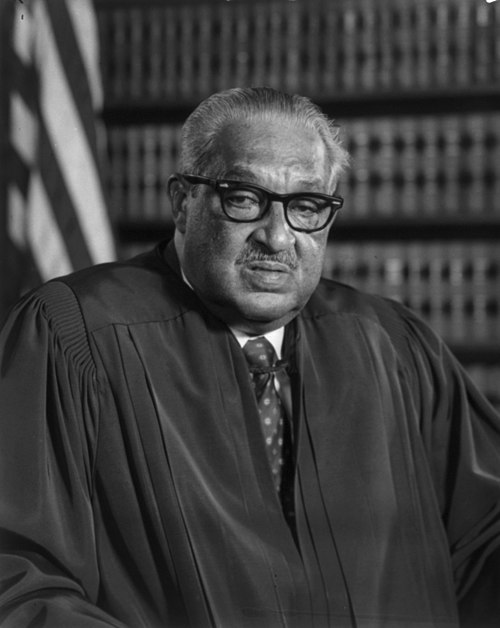
Thurgood Marshall
U.S. Supreme Court Justice; NAACP Attorney
Won Brown v. Board of Education (1954), ending school segregation; first African American Supreme Court Justice.
"In recognizing the humanity of our fellow beings, we pay ourselves the highest tribute."

Alan Dershowitz
Attorney and Legal Author
Defended O.J. Simpson, Claus von Bülow; authored bestsellers on law.
"No matter how unpopular the defendant, you have to defend them."

Amal Clooney
Human Rights Attorney
Represented Julian Assange, Yazidi victims; UN Special Envoy on Media Freedom.
"Law is not just about winning cases; it's about justice."

Nelson Mandela
Attorney; Anti-Apartheid Leader; President of South Africa
Used law degree to fight apartheid; became South Africa's first Black president.
"No one is born hating another person because of the color of his skin... People must learn to hate, and if they can learn to hate, they can be taught to love."
5. How to Prepare 🎯
If You’re Still a Student (High School/College)
If you’re in high school or college, your job is not to “be a lawyer already.” Your job is to build the core skills that law rewards: reading, writing, reasoning, and speaking.
What to study (smart, proven options):
- Pre-law-friendly majors like political science, history, and English
- Start early LSAT prep when the time is right (this is a major gate)
Skills to develop (like training stats in a game):
- Debate and persuasive speaking (join debate club)
- Essay writing (learn to argue clearly, not just sound fancy)
- Mock trials (practice thinking on your feet)
Projects you can start this week:
- Join debate club
- Volunteer at legal aid (you’ll learn what real clients need)
- Start a law blog (explain legal concepts in simple language—this builds clarity fast)
Internships to look for:
- Law firm shadowing through your school career center
- Courthouse clerkships (seeing the system up close changes everything)
If You’re Switching from Another Field
A realistic transition exists—but it’s not a “weekend reboot.” You’re looking at:
- A bachelor’s degree (if you don’t have one yet)
- A 3-year JD
- The bar exam (pass rate about 70%, and retakes happen)
Transferable skills that help a lot:
- Writing and editing
- Research (especially structured, evidence-based thinking)
- Client communication and professionalism
- Handling pressure and deadlines
The most realistic mindset: treat it like a long campaign, not a quick quest. Build proof of commitment through volunteering, shadowing, and consistent skill-building.
Must-Have Skills
Here’s the core skill stack (based on what top attorneys consistently show):
- High priority: Research (exceptional legal research is a common pattern)
- High priority: Writing (clear, precise, persuasive)
- High priority: Public speaking (court and negotiation)
- High priority: Resilience (rejections and losses are part of the job)
Free ways to train:
- Debate club + mock trial (speaking reps)
- Start a blog (writing reps)
- Volunteer at legal aid (real-world reps)
Time estimates (realistic):
- You can build basic debate confidence in 3 months of consistent practice.
- Writing improvement is ongoing, but you’ll feel a difference in 8–12 weeks if you write weekly and revise seriously.
6. Learning Resources 📚
Must-Read Books
These aren’t just “nice books.” They’re perspective builders—helpful when you’re deciding if law fits your personality and values.
{</* book “becoming” */>}
{</* book “my-own-words” */>}
Recommended Online Courses
Online courses are a low-risk way to test-drive the subject before you commit years and debt. Treat them like a “trial version” of law school.
{</* course “introduction-to-american-law” */>}
{
Tags
References
- https://www.indeed.com/career-advice/careers/what-does-an-attorney-do
- https://www.careerexplorer.com/careers/lawyer/
- https://www.britannica.com/topic/lawyer
- https://onlinemasteroflegalstudies.com/career-guides/become-a-lawyer/types-of-lawyers/
- https://texascareercheck.com/OccupationInfo/OccupationSummary/23-1011.00/
Ready to Start?
Everyone above started just like you. Pick one thing and do it today!