Entrepreneur
Business Entrepreneurship1. What Does a Entrepreneur Actually Do? 🤔
The Short Answer
You know that feeling when you complain about something and someone says, “Then do something about it”?
Entrepreneurs are the people who actually do something about it.
At the core, an entrepreneur spots a problem or opportunity and builds a business to solve it—by creating a product, a service, or a smarter way to do something. That could be an app, a sustainable product, a healthtech tool, or a whole new kind of service. The big theme: you’re turning uncertainty into something real.
Day-to-day, entrepreneurship is less “shark tank glamour” and more:
- Talking to users/customers (a lot)
- Testing ideas fast (and being okay with being wrong)
- Pitching/selling (even if you’re introverted)
- Tracking money (because cash burn is real)
- Hiring/building a team (or doing everything yourself early on)
A mini “day in the life” example:
- 9:00 AM: You review feedback from users and realize your “brilliant feature” confused everyone. Cool. You rewrite it.
- 11:00 AM: You jump on calls to validate your idea (basically: “Would you pay for this?”).
- 1:00 PM: You work on your MVP (minimum viable product)—maybe a simple site, a no-code prototype, or a basic app.
- 4:00 PM: You pitch. Could be to customers, partners, or investors. Rejection happens. You keep going.
- 9:00 PM: You update your budget, realize you need to cut costs, and make a tough call.
- Midnight: You’re still working because early-stage founders often hit 80+ hour weeks. Not always, but commonly.
Why This Career is Awesome ✨
Entrepreneurship is one of the few paths where your “school project energy” can turn into a real company. Like, imagine building something in your dorm/apartment that people across the world use. That’s the vibe.
People choose this career for:
- Freedom to pursue passions (you’re not waiting for permission)
- The thrill of building something from nothing
- Potential for huge financial upside (often equity-based at the top end)
- Real impact—your work can change how people live, work, travel, shop, or stay healthy
And the stories are wild. Sara Blakely didn’t start with a fancy business background—she sold fax machines door-to-door, then used $5,000 in savings to bootstrap Spanx after literally cutting the feet off pantyhose to prototype a better idea. That’s not “perfect conditions.” That’s “I’m doing it anyway.”
Flex moments you can actually brag about:
- “I built an MVP and got my first paying customer.”
- “I launched on Product Hunt.”
- “I pitched at a startup event and learned more in 5 minutes than a whole week of lectures.”
- “My business survived a pivot.” (That’s basically a boss-level achievement.)
The Hard Truths (Reality Check) ⚠️
Entrepreneurship can be amazing—but it’s also one of the most emotionally intense careers out there. The context is blunt: 90% of startups fail. That’s not to scare you—it’s to help you prepare like a pro.
And it’s not just “business hard.” It’s “life hard.” Founders deal with uncertainty, rejection, and pressure that can mess with sleep, confidence, and relationships. One example in the context: an ex-founder did 100-hour weeks for 3 years, hit depression, and eventually recovered by therapy and pivoting into consulting.
What Nobody Tells You:
- Stress is constant: rejection, cash burn, competition, isolation as a solo founder
- Work-life balance early on can be brutal: 80+ hour weeks are common, and 100+ hour weeks can happen in the first years
- Health risks are real: burnout rates are high (context says 50–70% within 3 years; also notes 70% founders experience burnout), plus anxiety, sleep deprivation, and sedentary desk life
Common Regrets from People Who Left:
- “Wish I knew the failure rate.”
- “Wish I prioritized health over hustle.”
The Financial Reality:
- Many founders earn $0 in the first years
- 50% never become profitable, and personal bankruptcy is common
- Hidden costs add up: $10K+ for prototypes/legal and “endless tools/courses”
Career Risks:
- Job security is low initially because failure is common
- Skills become outdated fast (tech/marketing changes yearly—“upskill or die”)
- Networks can be gatekept (VC access + bias against non-elite backgrounds)
Myth-bust: it’s not always hoodie-and-laptop freedom. Sometimes it’s spreadsheet-and-stress reality. But if you love solving problems and can handle uncertainty, it can be one of the most meaningful paths you’ll ever try.
2. Is This Career Future-Proof? 📈
Job Market Reality Check
The outlook here is strong: the career trend is growing, with an estimated 10–15% growth rate and high demand. Startup ecosystems are booming, and new categories keep opening up.
But here’s the twist: “high demand” doesn’t mean “easy.” The barrier isn’t a degree—no formal education is required. The barrier is execution:
- Can you validate an idea?
- Can you sell it?
- Can you survive long enough to iterate into something people actually want?
Also note the shift: traditional retail entrepreneurship is declining because e-commerce dominates. Meanwhile, emerging opportunities are exploding in:
- AI-driven startups
- Sustainable tech
- Web3/decentralized finance
- Healthtech
- Climate solutions
Will AI Replace This Job?
AI will absolutely change entrepreneurship—but it’s not replacing it.
According to the context, AI/automation will enhance efficiency (operations, scaling, execution speed). But it also amplifies the need for human entrepreneurs in:
- Innovation (new ideas + new markets)
- Niche markets (human taste still matters)
- Ethical oversight (humans decide what “should” be built)
- Visionary risk-taking (AI can’t replace that founder gut-check)
The play is simple: if you learn to use AI to move faster, you become harder to compete with. AI becomes your “extra teammate,” not your replacement.
💰 The Real Salary Numbers
Entrepreneur income is weird because it ranges from “ramen” to “private jet,” often in the same decade.
From the context:
- Entry-level: $40,000 – $80,000
- Mid-career: $100,000 – $250,000
- Senior: $500,000+ (often equity-based)
Reality check: those numbers can be misleading if you assume a steady paycheck. Many founders make $0 early on. The big money often comes later, and often through equity (ownership), not salary.
Is This Right for Me? (Self-Assessment)
Think of entrepreneurship like ranked mode in a competitive game. It rewards skill, endurance, and learning fast—not just “being smart.”
You’d be perfect if:
- You’re risk-tolerant (you can make decisions without perfect info)
- You’re resilient (you get rejected and still show up tomorrow)
- You’re creative (you can see options other people miss)
- You’re self-motivated (no one is grading you—except the market)
- You stay optimistic under pressure
Required aptitudes that actually matter:
- Problem-solving
- Adaptability
- Networking
- Basic financial literacy
Honestly, you might struggle if:
- You’re risk-averse and need certainty
- You need a steady paycheck right now
- You dislike uncertainty
- You struggle with self-discipline (because no boss is coming to save you)
Work-Life Balance: Early on: rough. Long-term: can become flexible once the business stabilizes and you build a team.
3. The Honest Truth: Disadvantages You Must Know ⚠️
Work-Life Balance Reality
Let’s not pretend. The context is explicit:
- 100+ hour weeks can be normal in the first years
- Weekends get sacrificed
- Family and relationships can get strained
If you’ve ever crammed for finals and thought, “I can’t do this forever,” entrepreneurship can feel like that… but self-assigned.
Stress & Mental Health
Founders deal with:
- Constant rejection (customers, investors, partners)
- Cash burn pressure
- Competition
- Isolation (especially as a solo founder)
Burnout is not rare. The context says:
- 50–70% burnout within 3 years
- Also notes 70% founders experience burnout
- Average “founder career” is 5–7 years before many pivot
And it’s not abstract. The context includes a real example: a founder quit after 3 years of 100-hour weeks and depression, then recovered through therapy and pivoting to consulting.
Physical Health Concerns
The context calls out:
- Sleep deprivation
- Anxiety
- Sedentary desk work (your body will complain if you ignore it)
If you go this route, treat health like a non-negotiable system—not a “reward” you earn later.
Financial Realities
This is the part nobody wants to hear, but you need it:
- Most earn $0 in the first years
- 50% never become profitable
- Bankruptcy is common
- Hidden costs can hit $10K+ (prototypes/legal + endless tools/courses)
Career Risks
- Skills can become obsolete fast (tech/marketing evolves yearly)
- Networking can be gatekept by VCs
- Bias exists against non-elite backgrounds
- Job security is low early due to high failure rates (but survivors can gain stability by diversifying ventures)
What People Who Quit Say
Common regrets in the context:
- “Wish I knew the failure rate.”
- “Wish I prioritized health over hustle.”
Bottom Line: If you need stability right now, entrepreneurship might be a later chapter—not your first chapter. But if you’re energized by big visions and can bounce back fast, it can fit you perfectly.
4. Legends in This Field 🏆
Did you know that Elon Musk coded games at 12 and sold his first program for $500—and still got bullied in school? That’s the first lesson: being “ahead” doesn’t protect you from hard stuff.
He later dropped out of a Stanford PhD program after 2 days to chase internet startups. Then came the brutal part: SpaceX’s first 3 rockets exploded. Imagine pouring everything into something and watching it fail three times in public. He was nearly bankrupt and slept on the factory floor—then kept iterating until it worked.
His edge wasn’t magic. It was persistence + speed of learning. His advice is intense, but it shows the mindset: working 80–100 hours/week to out-execute competitors.

Ever wondered how someone gets 60 rejections and still wins? Sara Blakely did exactly that. She wasn’t born into a fashion empire—she sold office supplies door-to-door for 7 years and saved $5,000. Then she made a prototype by cutting the feet off pantyhose. Simple, almost funny… until it became Spanx.
The dark moment: factories laughed and rejected her—60 times. Most people would quit at rejection #5. She kept cold-calling and kept believing in the product until she landed a deal with Neiman Marcus. That’s the entrepreneur superpower: staying in the game longer than “reasonable.”
Her advice hits especially hard if you’re a student: you don’t need to know everything to start.

Sara Blakely
Entrepreneur
Built Spanx into $1B+ intimates empire, youngest self-made female billionaire.
"Failure is not the outcome. Failure is not trying." [Forbes Interview]
Jack Ma’s story is basically the ultimate comeback arc. He failed the college entrance exam twice and got rejected from 30 jobs, including KFC. If you’ve ever felt like you’re “not the chosen one,” yeah—same.
He taught himself English by biking tourists around, then later saw the internet on a 1995 trip to the US. He founded China Pages, then pivoted to Alibaba after the dot-com crash. And it wasn’t smooth—Alibaba was nearly bankrupt in 2001. He laid off staff, ate instant noodles, and still rallied the team with a vision.
His quote is painfully honest: today is hard, tomorrow is worse… but if you keep going, you might reach the sunshine.
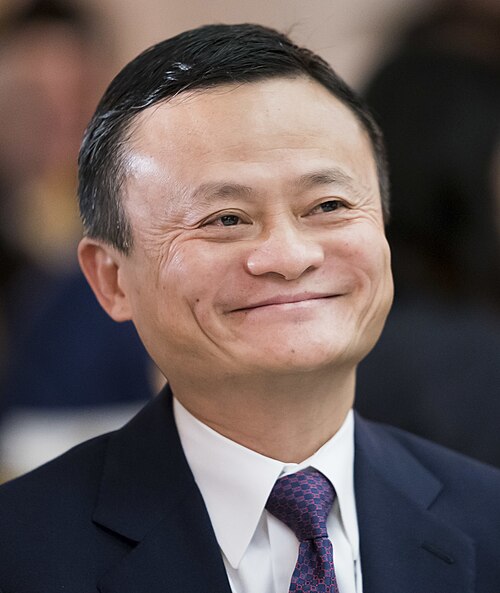
Jack Ma
Entrepreneur
Grew Alibaba to world's largest e-commerce company ($500B+ valuation).
"Today is hard, tomorrow will be worse, but the day after tomorrow will be sunshine." [World Economic Forum]
Brian Chesky built Airbnb during the 2008 recession… and funded it by selling cereal boxes. Yes, cereal. He and his team sold “Obama O’s” to survive. That’s not a Silicon Valley fairy tale—that’s scrappy survival mode.
Early on, Airbnb had zero bookings. Instead of pretending it was fine, he redesigned the site 7 times. Then COVID hit and crushed revenue by 80%—a nightmare scenario for a travel company. The pivot? Long-term stays. That’s entrepreneurship: your plan gets punched in the face, and you adapt.
His advice—“Stay prime”—is basically: keep learning, keep moving, don’t get stuck.

Brian Chesky
Entrepreneur
Co-founded Airbnb, disrupting travel industry to $100B+ company.
"Build something 10x better." [Y Combinator Talk]
5. How to Prepare 🎯
If You’re Still a Student (High School/College)
Good news: the context says no degree is required. Better news: you can start now with small experiments instead of waiting for “someday.”
What to study (pick what fits you):
- Business
- Computer science
- Design
Or self-teach online—seriously, that counts in entrepreneurship if you can build and sell.
Skills to develop (the ones that actually move the needle):
- Idea validation (talk to real humans, not just your friends)
- Basic coding (or no-code MVP building)
- Pitching (selling your idea in plain English)
- Financial modeling (basic money math so you don’t accidentally sink yourself)
Projects you can start this week (low pressure, high learning):
- Build an MVP: a simple app/site that solves one tiny problem
- Sell handmade items on Etsy
- Start a campus service (tutoring, delivery, event help—anything people will pay for)
Internships and “starter ramps”:
- Apply to Y Combinator Startup School (free)
- Intern at startups via AngelList/LinkedIn
If You’re Switching from Another Field
A lot of founders don’t start as “business people.” The patterns in the context show many are self-taught and some are dropouts—meaning entrepreneurship rewards learning speed more than perfect credentials.
A realistic transition plan:
- Start as an intrapreneur (innovation roles in big companies) to learn execution with a safety net
- Or pivot into adjacent roles like product manager, consultant, or venture capital—then launch when you’ve built skills and network
Timeline expectation: don’t expect instant stability. Expect experiments, small wins, and a lot of iteration.
Must-Have Skills
Based on common patterns from successful founders:
- Relentless persistence (priority: highest)
- Sales/pitching (priority: highest)
- Rapid iteration (priority: high)
- Team-building (priority: high)
Free places to practice:
- Pitching: Techstars Startup Weekend
- Iteration + feedback: Product Hunt + Indie Hackers
- Startup thinking: Y Combinator Startup School + Stanford YouTube course
6. Learning Resources 📚
Must-Read Books
These aren’t “read and become rich” books. They’re “read and stop making avoidable mistakes” books.
{</* books “the-lean-startup,zero-to-one,shoe-dog” */>}
Recommended Online Courses
Online courses are perfect for entrepreneurship because you can learn one idea and use it the same week.
{</* courses “how-to-start-a-startup,entrepreneurship-1-developing-the-opportunity,startup-school” */>}
Free Resources (Learn Without Spending)
No need to drain your wallet to get started. Here are free options from the context:
- Y Combinator Startup School: https://www.startupschool.org/
- Indie Hackers: real stories of bootstrapped makers earning $1K–$1M/month — https://www.indiehackers.com/
- Product Hunt: launch and discover products — https://www.producthunt.com/
- Podcasts:
- How I Built This — https://www.npr.org/podcasts/510313/how-i-built-this
- My First Million — https://open.spotify.com/show/1S2ZYTt0KMYtJ2tHFHcq7O
Communities to Join
Entrepreneurship is a team sport—even if you’re solo at first.
- Y Combinator Hacker News: https://news.ycombinator.com/
- Techstars Startup Weekend: https://www.startupweekend.org/
Networking isn’t “fake chatting.” It’s how you find:
- Co-founders
- First customers
- Mentors
- People who warn you before you make expensive mistakes
7. Where Can You Work? 🏢
🌎 Global Big Tech & Corporations (US/Europe)
Even if your dream is to found a company, working at high-impact companies can be like entrepreneurship training with resources.
Tesla (Austin, TX, USA)
EV/autonomy leader; great for engineers/innovators with stock upside.
Careers: https://www.tesla.com/careers
What they tend to reward: innovation, execution, and building real things.Airbnb (San Francisco, CA, USA)
Hospitality disruptor with a creative culture and global impact.
Careers: https://careers.airbnb.com/
Great if you love product thinking and user experience.
Visa/relocation note: international students should plan early and target roles/companies known for global hiring (you’ll need to research specifics for your situation).
🇰🇷 Korean Companies (Korean Companies)
From the context, here are notable options:
Coupang (e-commerce, rocket delivery; high-growth opportunities)
https://www.coupang.com/
Jobs: https://www.coupang.jobs/Kakao (messaging/payments/fintech leader)
https://www.kakaocorp.com/
Jobs: https://careers.kakao.com/Woowa Brothers (Baemin) (food delivery unicorn)
https://www.baemin.com/
Jobs: https://careers.woowahan.com/
🇯🇵 Japanese Companies (Japanese Companies)
Rakuten (e-commerce ecosystem)
https://global.rakuten.com/corp/
Jobs: https://global.rakuten.com/corp/recruit/Mercari (C2C marketplace unicorn)
https://about.mercari.com/en/
Jobs: https://careers.mercari.com/en/
🇨🇳 Chinese Companies (Chinese Companies)
ByteDance (TikTok parent, AI/content)
https://www.bytedance.com/en/
Jobs: https://jobs.bytedance.com/enXiaomi (consumer electronics/hardware)
https://www.mi.com/global/
Jobs: https://talent.xiaomi.com/
🚀 Global Startups Worth Watching
Startups can be high-risk, high-learning, high-growth environments.
Perplexity AI (USA, Series B): AI search engine disrupting Google
https://www.perplexity.ai/Anthropic (USA, Series C): safe AI models like Claude
https://www.anthropic.com/
Company types (quick reality check):
- Accelerators: Pros = mentorship/funding; Cons = intense pressure
- Corporates: Pros = resources; Cons = bureaucracy
🎯 Job Hunting Tips by Region
From the context:
Global/US: Build portfolio/GitHub, network YC/Hacker News.
Korea: LinkedIn/Saramin, Korean fluency, startup meetups.
Japan: Wantedly/Rikunabi, JLPT N1, demo skills.
China: Lagou/WeChat groups, Mandarin, rapid prototypes.
8. The Pro Mindset 💭
If you want the “insider secret,” it’s not a hack. It’s a pattern.
From the context, successful entrepreneurs tend to share:
- Relentless persistence
- Sales/pitching ability
- Rapid iteration
- Team-building
- A mindset that treats failure as data
They don’t see setbacks as “I’m not talented.” They see setbacks as “Okay, what did this teach me?”
Look at the examples:
- Musk: three rocket explosions, nearly bankrupt, kept iterating.
- Blakely: 60 rejections, kept cold-calling.
- Chesky: zero bookings, redesigned 7 times; COVID revenue down 80%, pivoted.
- Ma: repeated rejections, still built from an apartment and survived near-bankruptcy.
Daily habits (real, not fantasy):
- Sara Blakely: morning journaling; focuses on culture.
- Jack Ma: tai chi mornings; later focused on work-life balance.
- Brian Chesky: reads user feedback daily; weekly all-hands; design-focused days.
- Elon Musk: intense work schedule, minimal sleep, multitasking.
A quote you can actually use when you’re stuck:
Sara Blakely: “Don’t be intimidated by what you don’t know.”
That’s basically permission to start messy and learn fast.
9. Start Today! 🚀
You don’t need a perfect idea. You need a first experiment.
What you can do TODAY:
- In 10 minutes: Sign up for Y Combinator Startup School and browse the free curriculum: https://www.startupschool.org/
- This week: Post a simple “problem interview” form to classmates (or online friends) and talk to 5 people about one problem you want to solve. Write down exact phrases they use.
This month’s goals:
3. Build a tiny MVP: a simple site/app/no-code prototype that solves one small problem (even a campus service counts).
4. Join one community and show up twice: read and comment on Hacker News or Indie Hackers (don’t lurk forever):
In 3 months: 5. Launch somewhere public (Product Hunt is a classic) and collect real feedback: https://www.producthunt.com/
If you’ve read this far, you’re already ahead of most people.
The world of entrepreneurship is more open than you think.
Right now, this very moment, your journey to becoming someone’s role model might be starting.
Take that first step! 💪
Tags
References
- https://startupsusa.org/what-is-entrepreneurship/
- https://hc.edu/articles/what-is-entrepreneurship/
- https://onlinegrad.syracuse.edu/blog/word-entrepreneur-mean/
- https://entrepreneurship.babson.edu/entrepreneurship-definition/
- https://www.youtube.com/watch?v=rRpMrAMesbA
- https://www.econlib.org/library/Enc/Entrepreneurship.html
- https://www.merriam-webster.com/dictionary/entrepreneur
Ready to Start?
Everyone above started just like you. Pick one thing and do it today!