Medical Doctor
Healthcare Medicine1. What Does a Medical Doctor Actually Do? 🤔
The Short Answer
Imagine being a detective + team captain + teacher… except the “case” is a real human being who needs help today. 🩺
A Medical Doctor (MD) helps people when they are sick or injured by:
- Diagnosing what is wrong (listening to the story, examining the body, ordering tests like blood work or X-rays)
- Treating it (prescribing medicines, recommending procedures or surgeries, creating a recovery plan)
- Preventing future problems (teaching patients how to stay healthy)
- Coordinating with nurses and specialists (medicine is a team sport)
- Documenting everything (yes, detailed records are part of the job)
- Sometimes doing research to discover better ways to fight diseases
Here’s a “day in the life” style snapshot (not a specific schedule—just the vibe):
- Morning: Review patient charts and test results, then start seeing patients. You listen to their symptoms like you are collecting clues in a mystery game.
- Midday: Order labs or imaging, talk with nurses/specialists, adjust treatment plans, and explain next steps to families.
- Afternoon: Follow-ups: “Is the medicine working?” “Are you healing?” You also keep records updated (this is the less-glamorous but essential part).
- Later: Some doctors are on-call nights/weekends (especially early in training). Emergencies do not care about your calendar.
The coolest part? You are constantly switching modes: calm listener, sharp analyst, confident decision-maker, and empathetic human—all in one day.
Why This Career is Awesome ✨
Let’s be real: becoming a doctor is hard. But the “why” is powerful.
People choose this path because it can genuinely change lives—like saving someone from a heart attack, helping a child beat cancer, or guiding someone through recovery after surgery. That kind of impact hits different.
There are also “flex moments” (the good kind):
- You solve complex medical puzzles that feel like next-level logic problems.
- You might deliver babies, help someone walk again, or help a family understand what is happening and what to do next.
- You get the respect that comes from doing something society truly needs.
And it is not just drama-and-hero-music like in movies. Sometimes it is quieter:
- A patient comes back and says, “I can finally sleep.”
- A family says, “Thank you for explaining it in a way we could understand.”
- You help someone prevent a disease instead of treating it later.
Also: the future is getting interesting. Telemedicine, AI-assisted precision medicine, personalized genomics, and regenerative medicine are opening doors that did not exist for past generations of doctors.
The Hard Truths (Reality Check) ⚠️
If you are even considering medicine, you deserve the truth—not the “Instagram highlight reel.”
The training path has extremely high barriers:
- 4 years undergrad (pre-med)
- 4 years med school
- 3–7 years residency
- Board exams
- Fierce competition: top GPAs and MCAT scores are expected
And early on, the lifestyle can be brutal. Residency can mean 80+ hour weeks, plus nights/weekends on-call. It is not “sometimes busy.” It is “your schedule belongs to the hospital” busy.
What Nobody Tells You:
- Burnout is real: 40–50% burnout is reported, and physician burnout is listed as 45% here.
- Residency burnout is serious, with suicide rates noted as 2x the average.
- You will face emotional weight: patient deaths, hard conversations, and situations that stay in your head after you get home.
- Bureaucracy can feel like a boss fight you did not sign up for: paperwork, systems, and rules.
Common Regrets from People Who Left: From quitting doctors (shared in places like Reddit r/medicine, “why I quit”):
- “Didn’t know the extent of sleep deprivation.”
- “Missed family.”
- “Corporate medicine felt soulless.”
The Financial Reality:
- Med school can cost $200k+ in debt.
- Hidden costs add up: $50k+ for boards/exams, CME $10k/year, plus malpractice insurance.
- Income is stable, but delayed 10+ years while you train.
Career Risks:
- Skills can become obsolete fast: you may need to recertify every 10 years and keep up with journals constantly.
- Competition is intense: “top 1%” competition is mentioned, and diversity gaps persist.
- Some routine admin paperwork and basic diagnostics are declining (being automated by AI screening tools).
Myth-buster: It is not always glamorous. A lot of “doctoring” is communication, systems, follow-up, and documentation—done carefully, every day.
2. Is This Career Future-Proof? 📈
Job Market Reality Check
The career outlook here is growing, with a 3–7% growth rate and high demand. Over the next 5–10 years, demand is expected to stay strong because of aging populations and ongoing healthcare needs.
Job security is described as very high—healthcare is often considered “recession-proof” because people do not stop getting sick when the economy gets weird.
That said, the competition to enter the field is one of the toughest parts. The job market can be strong while the training pipeline is still extremely selective.
Will AI Replace This Job?
AI is going to change medicine—but it is not taking the whole job.
According to the context:
- AI will help with diagnostics and administrative tasks
- AI may reduce the need for routine admin paperwork and some basic diagnostics (AI screening tools)
But AI cannot replace:
- Human empathy
- Decision-making in emergencies
- Surgery
- The real-time judgment call of “this patient is crashing and we need to act now”
The doctors who thrive will be the ones who treat AI like a superpower, not a threat:
- Use AI tools to reduce busywork
- Spend more time on patient communication and complex decisions
- Stay curious and adaptable (medicine rewards lifelong learners)
💰 The Real Salary Numbers
Students always ask: “Okay… but how much do doctors actually make?”
From the context (USD ranges):
- Entry-level: $200,000 – $250,000
- Mid-career: $300,000 – $400,000
- Senior: $500,000+
Reality check: you do not start earning this right away. The income is stable, but it is delayed because training takes many years and comes with major costs (debt, exams, continuing education).
Is This Right for Me? (Self-Assessment)
Think of this like a character build in a game. Medicine rewards certain stats.
You’d be perfect if:
- Empathy is natural for you (you genuinely care about people’s stories)
- You are resilient (you get knocked down, you get back up)
- You are detail-oriented (small mistakes matter in medicine)
- You are a curious problem-solver (you like puzzles and patterns)
- You can stay calm under pressure
- You can commit to being a lifelong learner
Required aptitudes (these are not optional):
- Strong science aptitude: biology and chemistry
- Excellent memory
- Manual dexterity for procedures
- High emotional intelligence (patients are not “cases,” they are people)
Honestly, you might struggle if:
- You dislike blood or high-stress situations
- You need a strict 9-to-5 schedule
- You are a poor test-taker (the exams are a big part of the path)
- You have a strong aversion to debt (med school costs $200k+)
Work-Life Balance:
- Early: often poor (residency can be 80+ hour weeks, nights/weekends on-call)
- Later: improves, but still expect 50–60 hours/week, plus some travel for conferences
3. The Honest Truth: Disadvantages You Must Know ⚠️
Work-Life Balance Reality
Let’s not pretend: this is one of the hardest parts.
- Residency can be 80–100 hour weeks
- Nights/weekends/on-call can be frequent, and some level of on-call can continue long-term
- Even later, the expectation can be 50–60 hours/week
Translation: you will miss things—events, weekends, random hangouts—especially early. If family time is your top priority right now, you need a serious plan and support system.
Stress & Mental Health
This job comes with pressure that is hard to explain until you live it:
- You make life-or-death decisions
- You worry about malpractice
- Patients sometimes do not follow medical advice (and you still care about them)
- Bureaucracy can feel endless
The context also flags:
- 40–50% burnout, and 45% physicians burned out
- Depression and substance abuse risks
- Residency burnout with suicide rates noted as 2x average
This is why emotional intelligence is not “nice to have.” It is survival gear.
Physical Health Concerns
The risks are not only emotional:
- Physical exhaustion (especially during long shifts)
- Exposure to diseases
- Irregular hours can mess with sleep and recovery
Financial Realities
Yes, doctors earn high salaries—but the path is expensive:
- $200k+ med school debt
- $50k+ boards/exams
- CME $10k/year
- Malpractice insurance
And the income is stable but delayed 10+ years. You are investing a lot upfront for a later payoff.
Career Risks
Medicine changes fast:
- Skills can become outdated quickly
- You may need to recertify every 10 years
- You must keep learning constantly (journals, updates, new standards)
Also: entry is extremely competitive, with mention of “top 1%” competition and even “nepotism in residencies” plus persistent diversity gaps. That is not meant to discourage you—it is meant to help you prepare strategically.
What People Who Quit Say
Common regrets listed include:
- Not understanding the true level of sleep deprivation
- Missing family and major life moments
- Feeling like “corporate medicine” can be soulless
Bottom Line: If you want impact, challenge, and meaning—and you can handle long training plus pressure—medicine can be incredible. If you need predictable hours, low stress, and quick financial payoff, think twice.
4. Legends in This Field 🏆
Did you know that some of the most influential doctors were not just “straight-A perfect students” cruising through life? Many faced rejection, criticism, poverty, discrimination, or huge identity conflicts—and still built careers that changed the world.
Atul Gawande — turning mistakes into systems that save lives
Did you know Atul Gawande faced surgical complications early—and instead of pretending he was flawless, he built checklists to reduce errors?
He grew up in Athens, Ohio, born to Indian immigrant parents, and pushed through cultural pressure while pursuing two demanding worlds: surgery and writing. As a student, he studied political science and philosophy at Stanford, then went to Harvard for medical school, and even volunteered in India—already thinking beyond one hospital or one country.
The dark moment? Early complications in surgery. That is the kind of experience that can shake your confidence. His turning point was leaning into systems thinking: if humans are imperfect, build a system that catches mistakes before they hurt someone.
His work helped pioneer the WHO Surgical Safety Checklist, saving countless lives globally. And he kept writing—sharing medicine in a way that helps both doctors and regular people understand what “better” actually looks like.
Killer advice (from his TED Talk): “Embrace checklists and systems to make the impossible routine.”
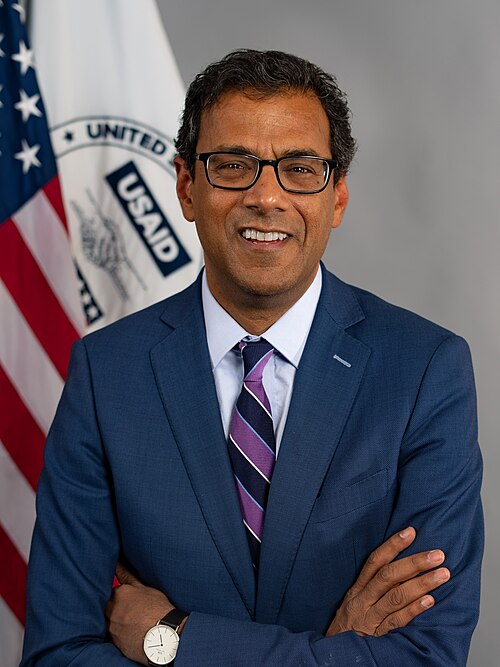
Atul Gawande
Surgeon, Writer, Public Health Leader
Pioneered WHO Surgical Safety Checklist, saving countless lives globally; bestselling author on medicine.
"Betterment is perpetual labor. The world is contradictory, messy, paradoxical. We can't wait until everything is perfect." - From 'Better: A Surgeon's Notes on Performance'
Paul Farmer — the doctor who refused to accept “some lives matter less”
Did you know Paul Farmer dropped out of college briefly to work and do odd jobs—then returned and ended up top of his class at Harvard?
His story is a reminder that your path does not have to be perfectly straight to be powerful. Coming from a humble family in Massachusetts, he took a detour (backpacking, working), then pushed forward into Harvard Medical School.
The turning point was a trip to Haiti during med school. He saw global health inequities up close—and instead of feeling sad and moving on, he built a mission around it. He co-founded Partners In Health and transformed global health for the poor, treating millions for TB/AIDS in Haiti and beyond.
He was criticized for “radical” ideas. That is the dark moment: when people tell you your vision is unrealistic. His response was simple and tough: prove it with results and data.
His quote hits like a mic drop: “The idea that some lives matter less is the root of all that is wrong with the world.”
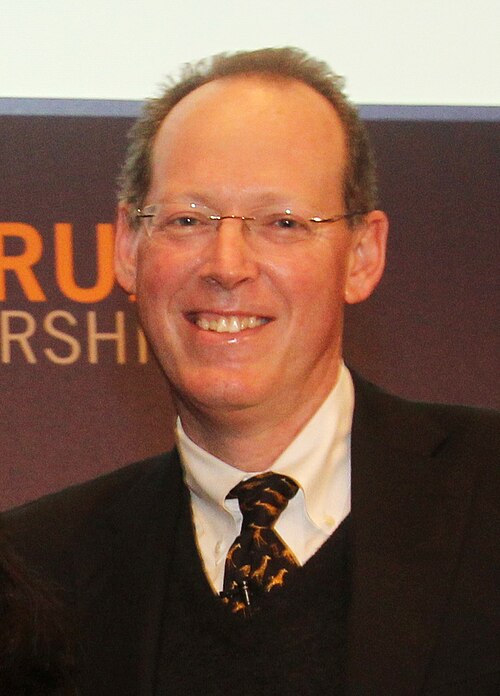
Paul Farmer
Physician and Global Health Leader
Transformed global health for poor, treating millions for TB/AIDS in Haiti and beyond.
"The idea that some lives matter less is the root of all that is wrong with the world." - From 'Pathologies of Power'
Ben Carson — from inner-city poverty and anger to neurosurgery history
Did you know Ben Carson was at the bottom of his class in 5th grade—and struggled with anger as a teen?
He grew up in inner-city Detroit poverty with a single mom. The early chapters of his life were not “future neurosurgeon vibes.” But his mom created a strict routine: limit TV to two hours a week and replace it with reading. That is not magic. That is discipline.
His darkest moment is intense: at 14, he nearly stabbed a friend. That moment became a turning point—he redirected his energy into study and self-control and eventually became a top student.
He faced rejection from many colleges, but kept going. Later, he became known for a historic surgical achievement: the first to successfully separate conjoined twins joined at the head.
His quote is pure mindset fuel: “Success is determined not by whether or not you face obstacles, but by your attitude toward them.”
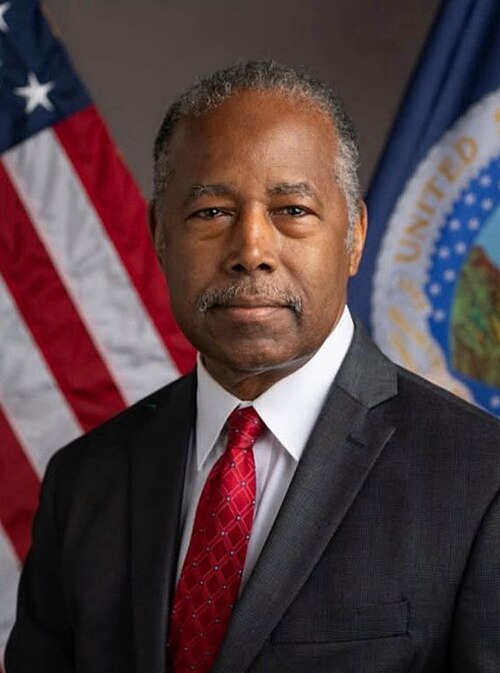
Ben Carson
Neurosurgeon
First to successfully separate conjoined twins joined at head.
"Success is determined not by whether or not you face obstacles, but by your attitude toward them." - From 'Gifted Hands'
Elizabeth Blackwell — rejected 29 times, still became the first woman MD in the US
Did you know Elizabeth Blackwell was rejected by 29 medical schools because she was a woman?
That is not a cute “setback.” That is a whole system telling you “no.” Her family immigrated and faced poverty. She taught school to save money for applications and studied independently—basically self-building her pre-med curriculum before it was even a normal thing.
Her turning point came when she was accepted to Geneva Medical School after all those rejections—and then she graduated first in her class. Imagine walking into a room where people doubt you, and then leaving with the top score. That is legendary.
Her quote is honest and a little heartbreaking: “It is not easy to be a pioneer—but oh, it is terribly lonely.” That is the price pioneers pay. But because she paid it, others had a path.
Her advice is simple and timeless: “No matter obstacles, keep trying.”
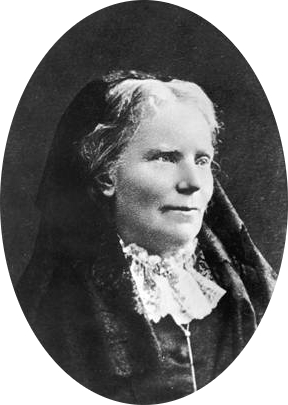
Elizabeth Blackwell
Physician Pioneer
First woman to earn MD degree in US (1849), paved way for women in medicine.
"It is not easy to be a pioneer—but oh, it is terribly lonely." - From her autobiography
Sanjay Gupta — a neurosurgeon who also became a public health storyteller
Did you know Sanjay Gupta was balancing medicine with journalism—and ended up becoming CNN’s Chief Medical Correspondent?
He is the example for students who feel like they are “too many things.” Science brain and communication brain? That can be a strength.
He excelled in science fairs, did pre-med at Michigan, and trained through residency at Grady Hospital. Then came a turning point: he covered 9/11 as a resident, blending TV with medicine in a way that shaped his career.
The struggle: balancing dual careers while dealing with criticism. (People love to say you cannot do two hard things at once—until you do.) He pushed through by excelling in both.
His quote is a reminder of what medicine really is: “Medicine is not only a science; it is also an art. It is about listening to people.”
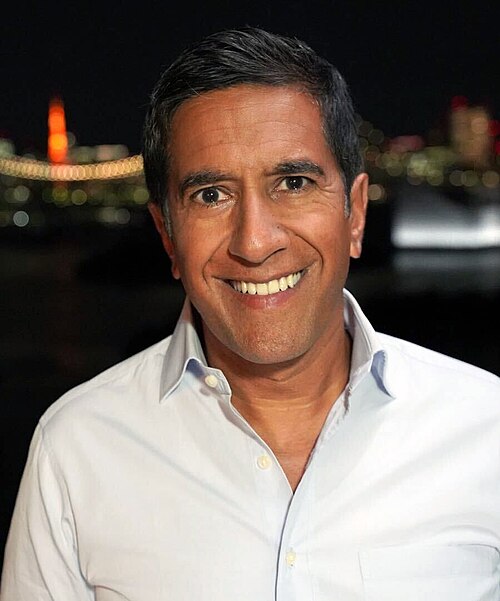
Sanjay Gupta
Neurosurgeon and Medical Correspondent
Neurosurgeon who covered major health crises like COVID-19 for millions.
"Medicine is not only a science; it’s also an art. It’s about listening to people." - CNN Interview
5. How to Prepare 🎯
If You’re Still a Student (High School/College)
You do not need to “be a genius.” You need a plan and consistency.
What to study (build your foundation):
- Biology
- Chemistry
- Physics
- Anatomy
And a pre-med major path (as noted in the context).
Skills to develop (the stuff that actually moves the needle):
- Strong study habits (medicine is a volume game)
- Empathy through volunteering (you learn people, not just textbooks)
- MCAT prep (treat it like training for a championship)
- Basic CPR
Projects you can start this week (seriously):
- Shadow doctors (even a short experience can clarify a lot)
- Start a health blog (practice explaining complex topics clearly—future you will thank you)
- Do a science fair project on diseases
- Tutor biology (teaching is a cheat code for learning)
Internships and early experiences:
- Hospital volunteering
- Research labs via university
- AAMC summer programs (apply early)
The goal is not just “resume padding.” The goal is to test-drive the reality of healthcare and prove to yourself you can handle it.
If You’re Switching from Another Field
Medicine is possible, but the timeline is long and the entry barriers are extremely high (undergrad + med school + residency + boards).
What can transfer well?
- Communication skills (explaining clearly is half the job)
- Resilience and discipline (training is demanding)
- Systems thinking (checklists, process improvement, teamwork)
Realistic expectation: this is not a “quick pivot.” It is a full rebuild. If you are considering it, start by getting direct exposure (volunteering, shadowing) before you commit.
Must-Have Skills
Here’s a practical skill stack based on the context:
- High priority: Science fundamentals (biology, chemistry)
- Resource: build through structured courses (see Section 6)
- High priority: Emotional intelligence and empathy
- Resource: volunteering in hospitals
- High priority: Study stamina and memory
- Resource: consistent MCAT prep habits
- Medium priority: Manual dexterity (procedures)
- Resource: hands-on training comes later, but you can build careful fine-motor habits now
- Medium priority: Communication (patients + teams)
- Resource: tutoring biology, health blogging
6. Learning Resources 📚
Tags
References
- https://hospitalcareers.com/career-profiles/medical-doctor
- https://www.indeed.com/hire/c/info/what-is-a-physician
- https://www.practicelink.com/resource-center/physician-job-search-interview/what-are-physicians-duties/
- https://www.careerexplorer.com/careers/doctor/
- https://wfme.org/wp-content/uploads/2016/06/RIH-of-Medical-Education_Ch-02.pdf
- https://en.wikipedia.org/wiki/Medical_doctor
- https://medlineplus.gov/ency/article/001936.htm
- https://www.truity.com/career-profile/physician-or-surgeon
Ready to Start?
Everyone above started just like you. Pick one thing and do it today!