
On this page
This career at a glance
Sources & references (8)
- https://www.indeed.com/hire/job-description/software-engineer
- https://www.aha.io/roadmapping/guide/agile-development/what-is-the-role-of-a-software-engineer
- https://jessup.edu/blog/engineering-technology/what-do-software-engineers-do-on-a-daily-basis/
- https://www.computerscience.org/careers/software-engineer/
- https://www.mtu.edu/cs/undergraduate/software/what/
- https://www.bls.gov/ooh/computer-and-information-technology/software-developers.htm
- https://www.baesystems.com/en-us/who-we-are/electronic-systems/engineering-careers/software-engineering
- https://www.snhu.edu/about-us/newsroom/stem/what-does-a-software-engineer-do
Weights that sat behind an API for three years came loose
For three years the best image models lived behind a metered API. You sent a prompt, you got back a picture, and you never touched the weights. That arrangement broke on June 22, 2026, when Krea released Krea 2, a 12-billion-parameter Diffusion Transformer, under a commercially permissive open-weight license. For the first time a top-ten image model could be downloaded, dissected, retrained, and run on hardware you control. The interesting work no longer sits at the prompt box. It sits one layer down, at the weights, and the person who lives there is the open-weight image model engineer.
The release is shaped to invite that work. Krea ships two checkpoints: Raw, an undistilled base meant to be fine-tuned, and Turbo, an eight-step distilled variant tuned for fast inference. The intended loop is explicit, train a LoRA on Raw, then run it on Turbo, because adaptations learned on the malleable base carry over to the fast model. That is not a consumer feature. It is an engineering brief, and it hands the differentiation that used to belong to the lab to whoever can execute it for a specific domain: automotive renders, architecture, product photography, a brand's house style.
Treat it as a system you can take apart, not a box you call
You need to understand a diffusion transformer as a system you can take apart, not a black box you call. Krea 2 is a single-stream DiT with grouped-query attention, a Qwen Image VAE, and Qwen 3 VL as the text encoder. Knowing what each piece does, where the latent space lives, how conditioning enters, what the distillation step trades away, is the difference between guessing at hyperparameters and reasoning about them. LoRA is the core craft: you learn low-rank weight updates that recover most of full fine-tuning's quality while training only a fraction of a percent of the parameters, on a dataset of dozens of images rather than millions.
The second half of the job is making the result run. Open weights mean nothing if you can't serve them, so you live in the local-inference toolchain, ComfyUI graphs, the diffusers library, quantization to fit a model onto a single consumer or workstation GPU, and the engineering to hit a latency target without wrecking quality. You read the technical report, reproduce its numbers, and judge when a distilled checkpoint is good enough for production and when the base is the only honest choice. Python and PyTorch are table stakes; the people who go furthest also read CUDA kernels and memory profiles, because the bottleneck is almost always VRAM and throughput.
You start by reproducing someone else's work
You start by reproducing other people's work. Pull Krea 2 from Hugging Face, stand it up in ComfyUI, train a LoRA on a small curated set, and prove it transfers from Raw to Turbo the way the report claims. That single exercise teaches you dataset curation, training stability, and the eye to tell a good adaptation from one that has overfit a watermark. From there you take a real domain, a studio that wants its lighting, a catalog that wants its products, and ship a fine-tune that holds up under their scrutiny.
Seniority moves you from training adapters to owning the pipeline. You design the data-to-deployment loop, build the evaluation harness that decides whether a checkpoint regressed, and make the quantization and serving calls that keep cost per image low. The market reflects the shift: the value of AI is sliding from owning a model to owning the workflow around it, and companies that can't train a frontier lab's model from scratch can absolutely fine-tune an open one. Roles land under titles like generative AI engineer, applied AI engineer, and ML engineer; in the U.S. these run from roughly $150K mid-level into the mid-$300Ks at senior, higher at labs shipping their own media models. The engineer who can turn open weights into a domain-specific product is the one who captures the margin the API used to keep.
Reputo Plus
Reality Session
Do not stop at reading. Work on a real task with someone doing this job.
You get a small repository with a bug, find the cause, fix it, and write a short note on what you changed and why.
People who walked this path
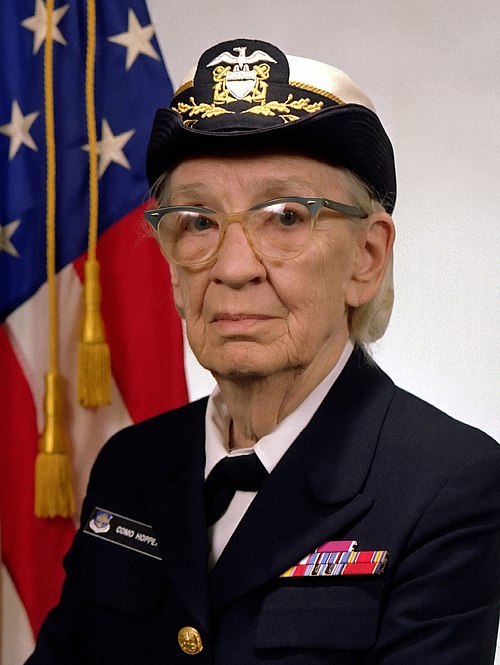
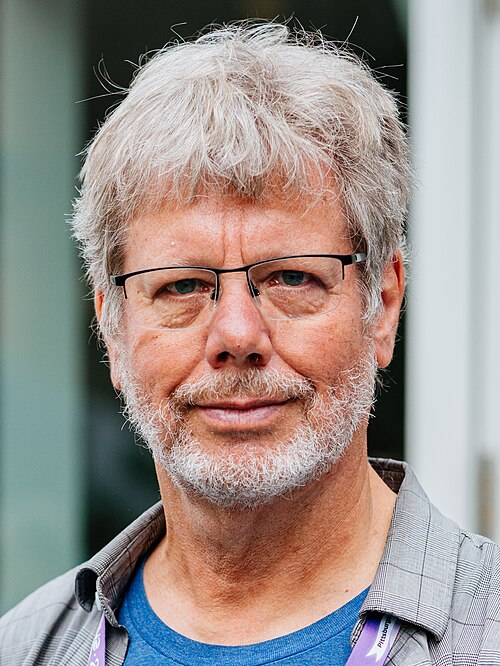
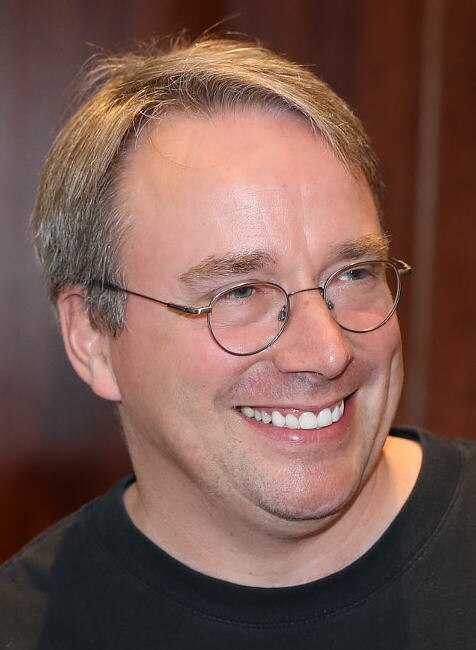
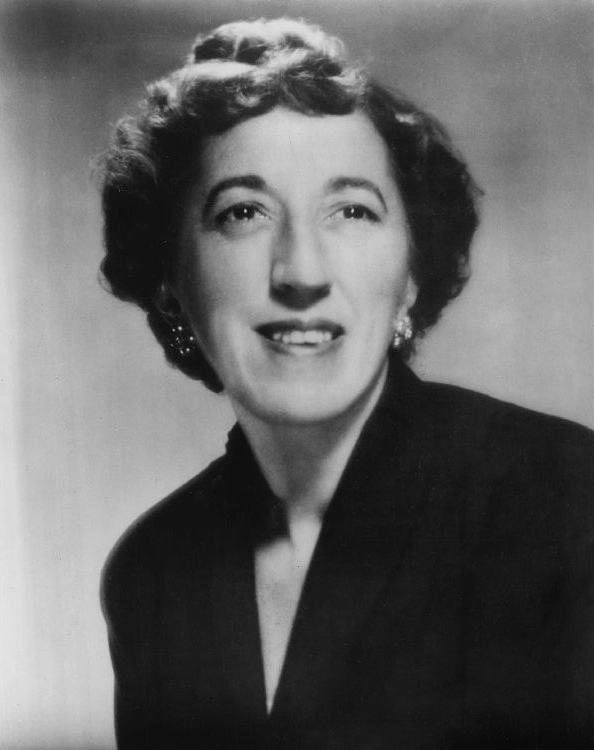

Tags
References
Ready to Start?
Everyone above started just like you. Pick one thing and do it today!