UX Designer
Design User Experience1. What Does a UX Designer Actually Do? 🤔
The Short Answer
You know that feeling when an app makes you tap 12 times just to do one simple thing… and you start questioning humanity? A UX Designer is the person whose job is to stop that from happening.
Think of UX design like being a detective for apps, websites, and products. You look for clues in what people actually do (not what they say they do), figure out what’s confusing or annoying, and then redesign the experience so it feels smooth and obvious.
Here’s what UX Designers do in real life:
- Talk to real users and listen for pain points (the “why is this so hard?” moments).
- Watch people use a product and spot where they get stuck.
- Sketch ideas, build wireframes, and create prototypes (so you can test without wasting months building the wrong thing).
- Test, iterate, and fix problems early—before a messy product ships.
A quick day-in-the-life example:
- 9:00 AM: Coffee + review notes from yesterday’s user interviews. You notice a pattern: people can’t find the checkout button (yikes).
- 10:30 AM: You sketch a few layout options, then turn the best one into a quick prototype in Figma.
- 1:00 PM: You run a short usability test. Three out of five users still hesitate. That’s a signal, not a failure.
- 3:00 PM: You tweak the design, simplify the flow, and share it with your team.
- 5:30 PM: You write a short summary: what you tested, what changed, and what you’ll validate next.
It’s not just “making things pretty.” It’s making things work—for humans.
Why This Career is Awesome ✨
UX design is creative problem-solving that can genuinely change lives. Like redesigning a banking app so elderly users can pay bills without stress. That’s not just design—that’s dignity.
It’s also one of those careers where your work can impact millions of people.
- Designers at Airbnb helped make booking feel seamless during pandemics.
- Designers at Duolingo used gamification to help retain 500M+ users.
And the “flex” moments are real:
- You can point to an app and say, “I helped make that easier.”
- Your portfolio can show case studies with research, prototypes, and results—proof you can solve problems, not just talk about them.
One designer described the purpose like this: I make technology human. If that hits you in the chest a little? You might be in the right place.
The Hard Truths (Reality Check) ⚠️
UX can be incredibly rewarding… and also emotionally exhausting sometimes.
Why? Because you’ll spend a lot of time:
- Getting feedback (some helpful, some chaotic).
- Iterating again and again.
- Watching work get changed, watered down, or even scrapped last-minute.
Tight deadlines can cause burnout. One designer famously quit after 5 years saying: “Clients ignored research, souls crushed." That’s real. UX is not just design—it’s persuasion, collaboration, and surviving “stakeholder wars.”
What Nobody Tells You:
- Crunch is a thing in startups/agencies: 60+ hours/week and weekends can happen.
- Remote work can be isolating, especially during launches.
- Physical health matters: sedentary work can lead to back pain and eye strain.
- Burnout is common: surveys report 40% leave in 2 years, and the average career span is often around 7 years before moving to management or exiting.
Common Regrets from People Who Left:
- “Wish I knew client BS sooner” — some pivot to Product Management for stability.
- Feeling like research doesn’t “win” against loud opinions can be draining.
The Financial Reality:
- Hidden costs are real: $500+ tools/subscriptions and conferences around $2k/year.
- Bootcamps can work (3–6 months), but bootcamp debt without a strong portfolio = struggle.
- Freelance can be volatile—income is not always steady.
Career Risks:
- Tools change fast (Sketch → Figma → who knows next). Expect 10+ hours/week learning to stay sharp.
- Entry is competitive: expect 10k+ applicants per job at FAANG.
- AI is automating some basics (more on that next).
Myth-busting moment: UX isn’t always a chill creative vibe with pastel sticky notes. Sometimes it’s five rounds of “pixel-push” revisions because someone’s boss’s boss “has a feeling.”
2. Is This Career Future-Proof? 📈
Job Market Reality Check
The outlook is strong:
- Growth trend: Growing.
- Projected growth rate: 15–22%.
- Demand level: Very high.
- Future prospects: Excellent 5–10 year outlook, with 22% growth projected through 2032 (faster than average).
Job security is generally high in tech, e-commerce, and healthcare—often more “recession-proof” than other roles because companies prioritize retention through better UX.
But reality check: high demand doesn’t mean easy entry. The portfolio bar is real, and competition can be fierce.
Will AI Replace This Job?
AI is already changing UX—just not in the “your career is over” way.
- AI will automate routine wireframing and basic usability testing (and some A/B testing work).
- But AI will amplify human roles in:
- Ethical design (bias reduction).
- Personalization.
- Complex, empathy-driven research.
Translation: AI can help you move faster, but it can’t replace the human job of understanding people—especially when emotions, accessibility needs, and ethics are involved.
If you learn to use AI tools (like Figma’s AI plugins), you’ll likely be more competitive, not less.
💰 The Real Salary Numbers
Students always ask: “Okay but… can I pay rent?”
Here are typical salary ranges (USD):
- Entry-level: $60,000–$85,000
- Mid-career: $90,000–$120,000
- Senior: $130,000–$180,000+
Where you work matters:
- Big Tech: Offers stability, resources, and scale (but bureaucracy).
- Startups: Offers ownership and impact (but instability and crunch).
- Agencies: Offers variety and lots of clients (but high churn and deadlines).
Is This Right for Me? (Self-Assessment)
Ever caught yourself thinking, “Why is this button here?” or “Who designed this flow, a villain?” That’s a green flag.
You’d be perfect if:
- You’re an empathetic listener who’s curious about people.
- You love puzzles and pattern recognition (spotting what’s broken and why).
- You can take feedback without melting (resilient to critique).
- You like collaborating—UX is a team sport.
- You get excited by user stories and aha moments.
Honestly, you might struggle if:
- You hate feedback loops and iteration.
- You strongly prefer solo work all the time.
- You have no interest in psychology/behavior.
- You get impatient when solutions take multiple tries.
Work-Life Balance:
- Flexible remote work is common.
- Typical workload is 40–50 hrs/week, but startups/agencies can spike into crunch.
3. The Honest Truth: Disadvantages You Must Know ⚠️
This section isn’t here to scare you. It’s here to protect you. A dream career is still a career—and UX has some sharp edges.
Work-Life Balance Reality
In mature companies, balance can be good. In startups/agencies, it can get intense:
- Crunch can hit 60+ hrs/week, including weekends.
- Launch periods can mean missed family events.
- Some environments feel “always on,” even if you’re not literally on-call.
If you want UX, plan for seasons: calm weeks and chaos weeks.
Stress & Mental Health
Stress doesn’t come from “designing.” It comes from people dynamics:
- Stakeholder wars (everyone has an opinion).
- A/B test failures (you thought it would work… data says nope).
- Endless “pixel-push” revisions.
And then there’s the mind game: imposter syndrome from constant critique. You’re always iterating, always being evaluated, and sometimes your best research gets ignored.
Physical Health Concerns
This job can quietly mess with your body if you’re not careful:
- Sedentary work → back pain.
- Eye strain from long screen time.
If you go into UX, treat your body like part of your toolkit.
Financial Realities
Even with good salaries later, early-stage costs can sting:
- $500+ tools/subscriptions.
- Conferences around $2k/year.
- Bootcamp debt can backfire if you don’t build a portfolio.
Career Risks
- Skills can become outdated fast (tools change yearly; expect 10+ hrs/week learning).
- Entry barriers are “moderate,” but portfolio gatekeeping is real.
- Competition can be brutal: 10k+ applicants per job at FAANG.
- Diversity gaps exist (women/minorities underrepresented).
Bottom Line: If you hate feedback, hate uncertainty, and want a job where you can “finish once and be done,” think twice. UX is iteration as a lifestyle.
4. Legends in This Field 🏆
Did you know that Don Norman got frustrated by clunky machines so early that it basically shaped the entire UX world?
Don Norman (The “Make Design Invisible” Legend)
Don Norman didn’t start as a “design kid.” As a student mixing electrical engineering and psychology, he was tinkering in labs and getting annoyed at how unfriendly machines were. That frustration became fuel.
Dark moment: Early consulting gigs flopped because clients ignored research. Imagine doing the work, having the evidence, and watching people shrug. Instead of quitting, he went bigger: he wrote bestselling books to spread the message.
Turning point: Joining Apple in 1993, right in the GUI revolution, to evangelize user-centered design.
His advice hits like a compass:
- Study people, not pixels.
- Prototype early, fail fast.
- Build empathy before you build screens.
Kim Goodwin (The “Problem First” Power Move)
Kim Goodwin’s origin story is relatable in a non-glam way: art school dropout, coded BASIC as a teen, started as a low-level consultant interviewing users. Not a straight line. More like a messy sketchbook.
Dark moment: Rejected from big tech. Instead of waiting for permission, she bootstrapped her way forward, iterated through failures, and eventually wrote a major UX book.
Turning point: Leading Cooper’s design team and winning in enterprise software—an area where “bad UX” is practically a tradition.
Her guiding quote is a cheat code:
Start with a problem, not a solution.
Jakob Nielsen (The “Usability Over Aesthetics” Scientist)
Jakob Nielsen was deep in HCI early—PhD student building hypertext systems and testing on peers. While others argued opinions, he argued data.
Dark moment: His early heuristics were ignored. He didn’t rage-quit. He persisted, proving that 10 heuristics can catch 80% of issues.
Turning point: Working at Sun Microsystems defining usability standards, then founding Nielsen Norman Group.
His advice is painfully practical:
- Usability > Aesthetics.
- Run your first test this week.
Julie Zhuo (The “Self-Taught to VP” Rocket Story)
Julie Zhuo’s story feels like a movie montage: immigrant student designing posters, cold-emailing for an internship at Facebook.
Dark moment: Laid off before Facebook and faced 100+ rejections. She journaled failures to build resilience instead of letting them crush her.
Turning point: She got promoted after redesigning a News Feed prototype, and later scaled Facebook’s design team from 1 to 300+ designers as VP of Design.
Her quote is a reminder that empathy isn’t optional:
The best designers are those who solve problems they themselves don't have.
Femke van Schoonhoven (The “Portfolio > Degree” Modern Mentor)
Femke started redesigning school websites for fun as a communication student. Not a fancy title—just curiosity and practice.
Dark moment: Post-grad self-doubt. She didn’t hide. She built a public portfolio and even shared failures online to gain mentors.
Turning point: An Uber portfolio showcase led to a senior role, and she became a major voice for juniors (100k+ LinkedIn followers).
Her advice is blunt in the best way:
- Ship ugly prototypes today.
- Portfolio hackathons now.
Did you know that Don Norman helped shape modern UX at Apple during the GUI revolution—and had early consulting failures because clients ignored research?
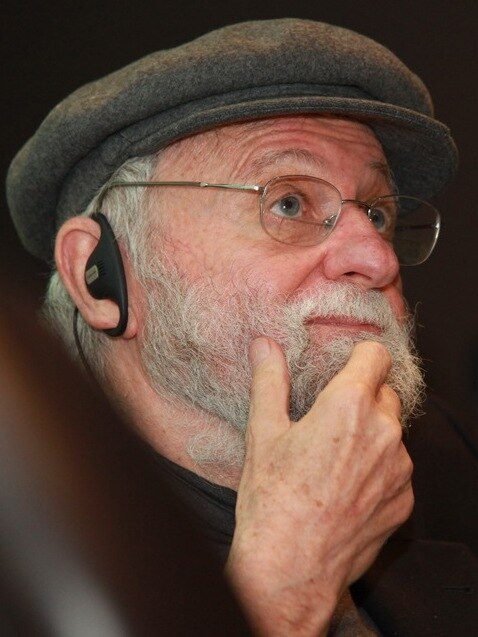
Don Norman
UX Pioneer, Former Apple VP, Author
Coined 'user-centered design'; influenced modern UX at Apple and beyond.
"Good design is actually a lot harder to notice than poor design, in part because good designs fit our needs so well that the design is invisible." (The Design of Everyday Things)
Did you know Kim Goodwin was an art school dropout who coded BASIC as a teen—and still became a UX leader shaping products at Yahoo, eBay, and HP?

Kim Goodwin
UX Leader, Author
Authored seminal UX book; shaped designs at Yahoo, eBay, HP.
"Start with a problem, not a solution." (Designing for the Digital Age)
Did you know Jakob Nielsen’s usability heuristics were ignored at first—until he proved with data that 10 heuristics can catch 80% of issues?

Jakob Nielsen
UX Evangelist, Founder of Nielsen Norman Group
Invented 'usability heuristics'; 100k+ citations in UX research.
"Users spend most of their time on other sites. This means that users prefer your site to work the same way as all the other sites they already know." (NNGroup articles)
Did you know Julie Zhuo faced 100+ rejections and a layoff before becoming VP of Design and scaling a design team from 1 to 300+?

Julie Zhuo
Former VP of Design at Facebook, Author
Grew Facebook design team during explosive growth.
"The best designers are those who solve problems they themselves don't have." (The Making of a Manager)
Did you know Femke turned post-grad self-doubt into momentum by building a public portfolio—and that portfolio showcase helped her land a senior role at Uber?

Femke van Schoonhoven
Senior UX Designer at Uber, Podcast Host
Redesigned Uber rider app; 100k+ LinkedIn followers inspiring juniors.
"Portfolio > Degree. Build, ship, iterate—start today." (Femke.design blog)
5. How to Prepare 🎯
If You’re Still a Student (High School/College)
If you’re in school right now, you’re in the perfect “low-risk sandbox” phase. Use it.
What to study (pick a lane, or mix them):
- Human-Computer Interaction (HCI).
- Psychology.
- Graphic Design.
- Computer Science minors.
- Bootcamps like the Google UX Certificate (portfolio-building focus).
Skills to build (simple plan):
- Figma proficiency.
- User interviews.
- Wireframing. Recommendation: practice 1 hour/day. That’s not a vibe quote—that’s the difference between “interested” and “hireable.”
Projects you can start this week (portfolio gold):
- Redesign flaws in TikTok or Instagram (pick one annoying flow and fix it).
- Build a portfolio with 3 case studies, each showing:
- The problem.
- Your research.
- Your prototype.
Internships and experience:
- Apply through LinkedIn/Indeed to startups (less competition than mega-brands).
- Contribute open-source designs on GitHub (yes, design can show up there too).
If You’re Switching from Another Field
UX has multiple entry doors.
- Self-taught/bootcamps (Julie Zhuo, Femke).
- HCI/psych degrees (Don Norman, Jakob Nielsen).
- Art pivots (Kim Goodwin).
What transfers well?
- Communication skills (explaining decisions).
- Research and analysis (pattern recognition).
- Storytelling (walking people through your case study).
- Collaboration (UX is cross-functional by nature).
Realistic timeline: Bootcamps can be 3–6 months, but your portfolio and practice time matter more than the calendar. Don’t rush the case studies—make them real.
Must-Have Skills
The core stack looks like:
- High priority: User research, empathy mapping.
- High priority: Prototyping in Figma/Sketch.
- High priority: Iteration (testing, learning, improving).
And keep an eye on trends:
- AI-powered prototyping (Figma AI, Uizard).
- Voice/AR/VR UX.
- Inclusive design (including neurodiversity).
- No-code tools democratizing entry.
6. Learning Resources 📚
Must-Read Books
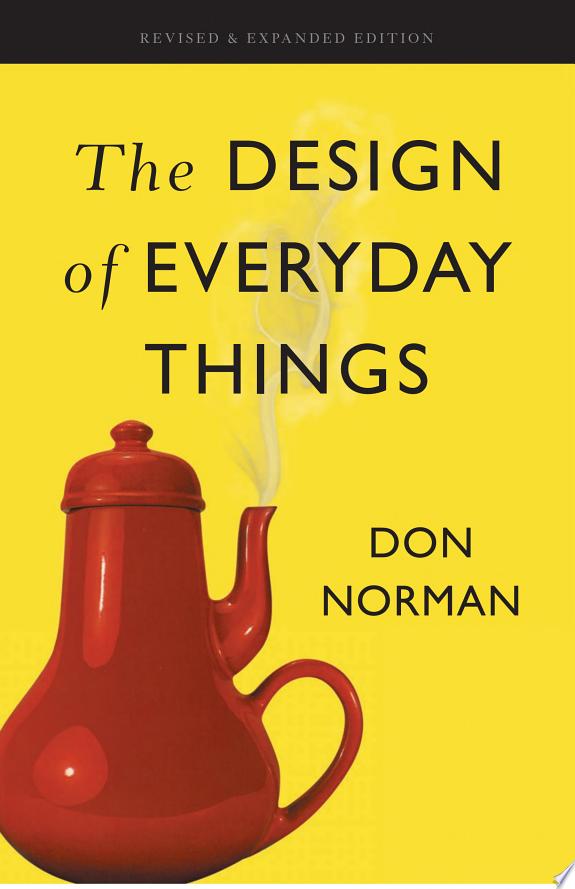
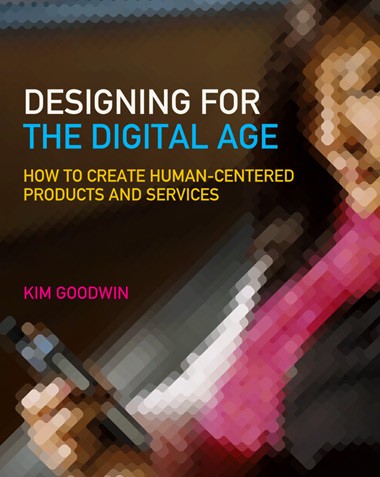
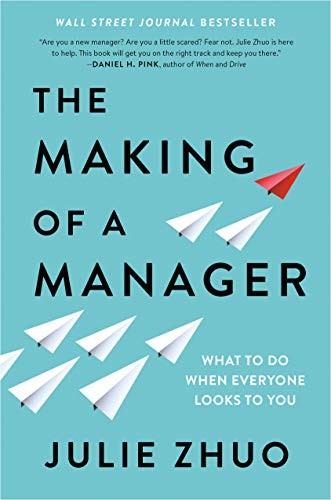
Books are like having a mentor in your backpack. These three are foundational—especially if you want to sound smart and design better.
Recommended Online Courses
Online courses work well for UX because you can learn the process end-to-end and come out with portfolio-ready work.

Google UX Design Professional Certificate
Full UX process from research to portfolio-building.

UX Design Fundamentals
Wireframing, prototyping basics.
Free Resources (Learn Without Spending)
If you’re broke (student life), you can still learn a ton for free:
- Nielsen Norman Group: https://www.nngroup.com/ — Gold-standard UX research articles and videos.
- Femke.design: https://femke.design/ — Portfolio tips and junior career advice.
- Podcasts for study/commute time:
- Design Better: https://www.pivot.design/podcast
- UX Podcast: https://uxpodcast.com/
Communities to Join
Networking sounds cringe until it gets you a mentor, feedback, or an internship.
- ADPList (free UX mentorship matching): https://adplist.org/
- UX Design World (conferences and meetups): https://uxdesignworld.com/
Why it matters: UX is portfolio-driven, and feedback is oxygen. A mentor can help you turn “this looks cool” into “this case study is hireable.”
7. Where Can You Work? 🏢
🌎 Global Big Tech & Corporations (US/Europe)
Big Tech can be a great place to learn scale—designing for massive user bases where tiny changes matter.
Google (Mountain View, CA, USA) Leads in AI UX innovation; great for learning scale. Careers: https://careers.google.com/jobs/results/?q=ux%20designer
Apple (Cupertino, CA, USA) Premium hardware-software UX; secretive but prestigious. Careers: https://www.apple.com/careers/us/
What they look for: Portfolio > resume, and case studies with metrics.
Korean Companies
- Samsung Electronics — Mobile UX powerhouse; global projects. Careers: https://www.samsungcareers.com/
- Naver Corporation — Search/app UX leader in Korea. Careers: https://recruit.navercorp.com/
Regional hiring tip (Korea): Korean fluency, specific tools, and university networks can matter.
Japanese Companies
- Sony — Entertainment/hardware UX. Careers: https://www.sony.com/en/SonyInfo/Careers/
- Rakuten — E-commerce UX innovator. Careers: https://global.rakuten.com/corp/recruit/
Regional hiring tip (Japan): Japanese proficiency and humility in interviews.
Chinese Companies
- Tencent — WeChat/gaming UX giant. Careers: https://careers.tencent.com/
- Alibaba — E-commerce UX at massive scale. Careers: https://talent.alibaba.com/
Regional hiring tip (China): WeChat mini-program experience and rapid iteration demos.
🚀 Global Startups Worth Watching
- Linear (USA, Series C) — UX tool for product teams. https://linear.app/
Startup life can mean bigger ownership and faster growth… but also more instability and crunch. Choose wisely.
8. The Pro Mindset 💭
The best UX Designers don’t just “design.” They run a loop: observe → hypothesize → prototype → test → learn → repeat.
Legends share common patterns:
- User-first mindset.
- Fail-forward attitude.
- Lifelong curiosity.
- Resilience to critique.
Want “insider secrets”? Steal these habits from the role models:
- Don Norman: Morning walks for ideation, daily user observation.
- Kim Goodwin: Sketches by hand daily, user interviews as a routine.
- Jakob Nielsen: Analyzes 5 sites daily for heuristics.
- Julie Zhuo: 6 AM design sketches, weekly deep feedback sessions.
- Femke: Daily Figma practice, reflection through podcasting.
Also, notice the theme in their advice:
- “Talk to users weekly—it’s your superpower.”
- “Run your first test this week.”
- “Ship ugly prototypes today.”
They’re not waiting for perfect. They’re building momentum.
9. Start Today! 🚀
You don’t need permission to start UX. You need a problem, a prototype, and a willingness to learn in public.
What you can do TODAY:
- In 10 minutes: Open Nielsen Norman Group and read one article: https://www.nngroup.com/
- This week: Pick one annoying flow in TikTok or Instagram and sketch a redesign (paper is fine), then rebuild it as a simple prototype in Figma.
This month’s goals: 3. Build your first portfolio case study: problem → research → prototype (start small, but finish it). 4. Join ADPList and request one mentorship chat: https://adplist.org/
In 3 months: 5. Have 3 case studies in your portfolio and a consistent habit of 1 hour/day practice (Figma + interviews + wireframing).
If you’ve read this far, you’re already ahead of most people. The world of UX Designer is more open than you think. Right now, this very moment, your journey to becoming someone’s role model might be starting. Take that first step! 💪
Tags
References
- https://www.hays.com.au/it/ux-designer-jobs/job-description
- https://careerfoundry.com/en/blog/ux-design/what-does-a-ux-designer-actually-do/
- https://www.indeed.com/hire/job-description/ux-designer
- https://careerbootcamps.stonybrook.edu/blog/ui-ux-design/what-does-a-ui-ux-designer-do/
- https://designlab.com/blog/what-does-a-ux-designer-do
- https://www.productplan.com/glossary/ux-designer/
- https://www.coursera.org/articles/what-does-a-ux-designer-do
- https://www.nngroup.com/articles/ux-career-advice/
Ready to Start?
Everyone above started just like you. Pick one thing and do it today!