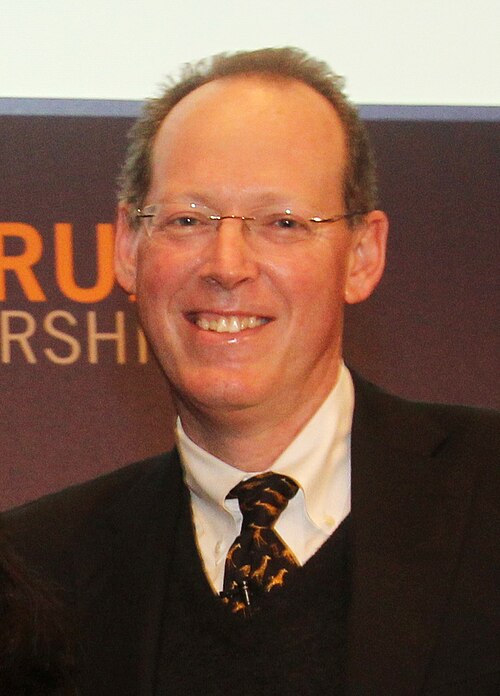
""The idea that some lives matter less is the root of all that is wrong with the world." - From 'Pathologies of Power'"
Their Story
Picture this: a young man with no fancy pedigree, no silver spoon, and no guarantee that school will even work out—yet he grows up to challenge the world’s most dangerous idea: that some people simply matter less.
Paul Farmer is born in 1959 and raised in a humble family in Massachusetts. His life doesn’t begin in glossy lecture halls. It begins with uncertainty—tight money, big dreams, and the kind of quiet grit you only notice when someone refuses to quit. At one point, he even drops out of Bowdoin College. Imagine that moment: friends moving forward, expectations crashing down, and Paul taking odd jobs, backpacking, working—trying to figure out who he is when the “perfect plan” breaks. What would you do if your path suddenly vanished?
But Paul doesn’t disappear. He returns. And when he comes back, he doesn’t just catch up—he storms to the top of his class and makes his way to Harvard Medical School. He reads like someone racing a clock, rising early, devouring books, and pushing himself into the real world instead of staying safely behind classroom walls.
Then comes the turning point—the scene that changes the entire movie.
During medical school, Paul travels to Haiti. He sees people suffering from diseases like tuberculosis and AIDS, not because cures are impossible, but because care is treated like a privilege. In that moment, the world feels unfair in a way you can’t unsee. He could have looked away. He could have said, “That’s tragic,” and flown back to comfort. Instead, he stays—and helps found Partners In Health.
The critics arrive quickly. His ideas are called “radical,” “too expensive,” “unrealistic.” He hears the doubt in their voices: Why invest so much in the poor? Paul answers with results—patients healed, communities strengthened, data that refuses to lie. And beneath it all is a fierce belief he later puts into words: “The idea that some lives matter less is the root of all that is wrong with the world.”
Even when his own health makes fieldwork harder, he keeps going. Early mornings. Endless reading. Long days beside patients others ignore.
To students, his advice lands like a challenge: “Stay with the poor until solutions work.” Because the lesson of Paul Farmer’s life is not just about medicine. It’s about loyalty—to people, to truth, to the hard work of making the world fairer, one stubborn, hopeful step at a time.
Advice for Students
“Stay with the poor until solutions work.” - To students