""In recognizing the humanity of our fellow beings, we pay ourselves the highest tribute." (Supreme Court opinion)"
Their Story
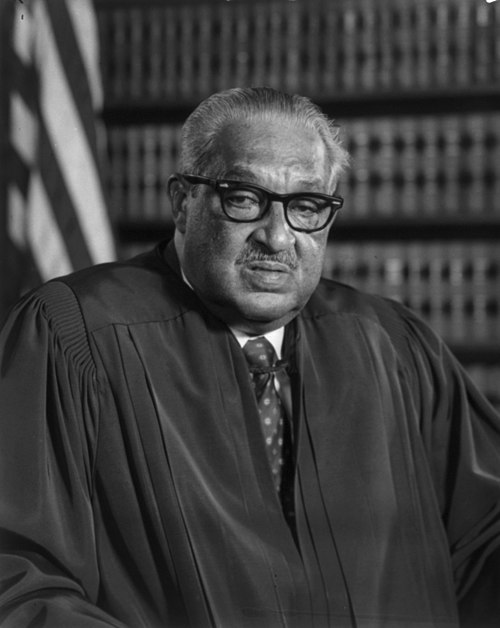
Picture this: a young man in Baltimore, pockets nearly empty, walking past a school he isn’t allowed to enter—because of the color of his skin. The city hums, streetcars rattle, and the rules of segregation sit like iron bars in the air. Once upon a time, that young man is Thurgood Marshall, and the world keeps telling him, “Not for you.”
In those segregated classrooms, he learns early that injustice isn’t always loud. Sometimes it’s a “No” whispered by a sign on a door, a textbook too old to hold together, a future that feels pre-decided. He struggles. He stumbles. He’s not born with power—he’s born with a question: Why should this be normal?
Then comes Howard University School of Law, where the pressure is heavy and the stakes feel life-sized. He studies late, edits the Law Review, and sharpens his mind like a blade. But even a sharp blade can slip. In his early legal fights against segregation, he loses cases. Imagine it—he walks out of court with the law still standing against him. What would you do then? Quit? Or dig deeper?
Marshall chooses the harder path. He becomes meticulous—obsessive, even—about preparation. He works long hours, building arguments brick by brick, and mentors young lawyers as if he’s lighting torches for the next travelers.
Then the turning point hits like a drumbeat: 1936. He joins the NAACP and steps onto a battlefield made of paper—briefs, evidence, testimonies, history itself. Over the years, he argues 32 cases before the Supreme Court. Thirty-two. Each one a door he tries to push open.
And in 1954, the movie’s climax arrives: Brown v. Board of Education. The question is simple, the consequences enormous—should children be separated by race in school? Marshall stands before the highest court and fights for a truth that should never have needed defending. When the decision comes, school segregation begins to fall.
Later, he becomes the first African American Supreme Court Justice. From “Not for you” to “You belong here.”
And he never forgets the heart of it: “In recognizing the humanity of our fellow beings, we pay ourselves the highest tribute.” His advice echoes like a steady voice in the dark: “Do the right thing, even if it’s unpopular.”
So, students—when the world hands you a locked door, will you walk away? Or will you become the person who learns the law of the lock… and builds a key?
Advice for Students
“Do the right thing, even if it’s unpopular.”